Transformative $37 million investment will create alliance to advance breakthroughs in aging research, clinical care
Through the generosity of The Starr Foundation, which is chaired by alumnus Jeffrey W. Greenberg ’73, Brown University and Brown University Health are partnering to advance treatment for age-associated diseases and extend healthy lifespan.
The Starr Healthspan Innovation Alliance creates pathways for discoveries made in Brown University laboratories to be assessed in clinical trials in Brown University Health’s network, expanding treatment options for local patients. Photo courtesy of Andrew Moran/Brown University Health.
PROVIDENCE, R.I. [Brown University] —With a $37 million investment from The Starr Foundation, Brown University and Brown University Health will launch a new partnership to accelerate breakthroughs in aging research, clinical trials and patient treatments.
By integrating University research with the health system’s clinical trial network, The Starr Healthspan Innovation Alliance aims to bridge the gap between scientific discovery and life-changing treatments for major age-related diseases of the modern era.
The funding will enable Brown University to build on and expand the work of the Center on the Biology of Aging, support groundbreaking laboratory research, and recruit leading researchers in the burgeoning field of geroscience, which is the study of the genetic, molecular and cellular mechanisms of aging. It will also expand clinical trials across Brown University Health, strengthening the ecosystem in which faculty-led research flows from laboratories to hospitals to patients.
“The Starr Foundation’s generous investment will enable Brown University and Brown University Health to advance a bold vision for the future of medicine focused on helping people live fuller, healthier lives as they age,” Brown University President Christina H. Paxson said. “By uniting world-class science at Brown with clinical care across the Brown University Health system, we can translate cutting-edge research into life-changing treatments for devastating conditions like cancer and dementia.”
The Starr Foundation’s generous investment will enable Brown University and Brown University Health to advance a bold vision for the future of medicine focused on helping people live fuller, healthier lives as they age. By uniting world-class science at Brown with clinical care across the Brown University Health system, we can translate cutting-edge research into life-changing treatments for devastating conditions like cancer and dementia.
Christina H. Paxson
Brown University President
The alliance builds on an established academic medical ecosystem and longstanding partnerships between Brown’s Warren Alpert Medical School and the teaching hospitals within Brown University Health, through which faculty and clinical researchers collaborate. In 2022, an operational enterprise was established to align the research of the University’s Division of Biology and Medicine with that of its clinical partners, and in 2024, the two organizations expanded their longtime affiliation to strengthen top-quality patient care, medical education and biomedical research in Rhode Island.
“This alliance, made possible by the transformative philanthropic gift from The Starr Foundation, deepens our shared commitment to clinical excellence and academic innovation,” said John Fernandez, president and CEO of Brown University Health, Rhode Island’s largest healthcare system. “By combining our extensive clinical trial infrastructure with Brown’s cutting-edge research on aging biology, we will bring novel treatments to patients faster than ever before. At its heart, this partnership is about helping people stay active, vibrant and present as they age for the moments that matter most with their families.”
Over the past seven decades, The Starr Foundation has awarded more than $4 billion in grants to address society’s most pressing challenges, including sustained support for medical research advancing better outcomes for patients.
“Brown University’s innovative scientists and the exceptional clinicians at Brown University Health are uniquely positioned to translate groundbreaking research into effective treatments for patients,” said Starr Foundation Chair Jeffrey W. Greenberg. “The Starr Foundation is proud to support this transformative alliance, with combined expertise that will accelerate breakthroughs for aging-related diseases to improve the human health span.”
Brown University’s innovative scientists and the exceptional clinicians at Brown University Health are uniquely positioned to translate groundbreaking research into effective treatments for patients. The Starr Foundation is proud to support this transformative alliance, with combined expertise that will accelerate breakthroughs for aging-related diseases to improve the human health span.
Jeffrey W. Greenberg ’73, P’06, P’09, P’11, P’15
Starr Foundation Chair
The alliance creates pathways for discoveries made in Brown University laboratories to be assessed in clinical trials in the health system’s network, enabling the rapid flow of innovation to identify new medicines, devices and diagnostic tests, said Dr. Mukesh K. Jain, senior associate provost for life sciences, senior vice president for health affairs and dean of medicine and biological sciences at Brown University.
“Our overarching vision has always been to build an integrated, comprehensive biomedical ecosystem that allows innovations to move seamlessly from discovery to real-life impact,” Jain said. “With The Starr Healthspan Innovation Alliance, we are connecting our outstanding researchers at Brown’s world-class Center on the Biology of Aging with the clinical trials unit at Brown University Health, ensuring science and research can flourish from the bench to bedside.”
Expanding clinical trials, discovering the causes and treatments of aging
Aging is the greatest risk factor for most major chronic conditions and diseases, including cancer, heart disease, neurodegenerative disorders like dementia and Parkinson’s, metabolic disorders like diabetes and hypertension, immune dysfunction and more. Geroscience, an emerging shift in medicine, targets the underlying biological mechanisms of aging to extend “health span” — the number of years people live in good health.
“Aging affects essentially every organ system, and our research discoveries show that some of the body’s efforts to combat aging can actually be counterproductive to longevity,” said John Sedivy, director of the Center on the Biology of Aging and principal investigator for the innovation alliance. “As researchers, our goal is to understand these fundamental mechanisms of aging so we can intervene, mitigate the negative aspects and extend health in old age.”
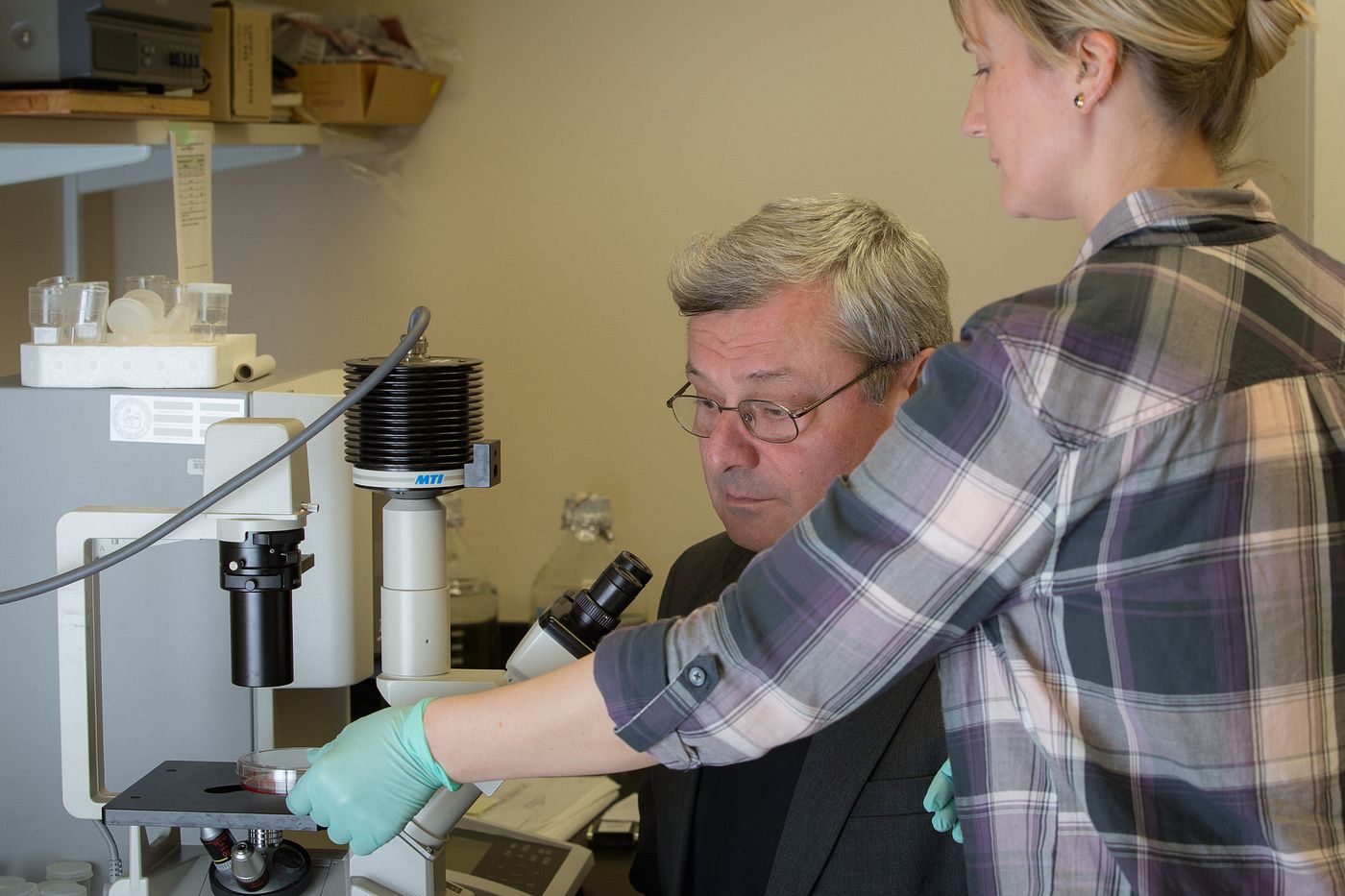
Brown University's Center on the Biology of Aging, led by biology professor John Sedivy, has long been at the leading edge of research on geroscience, which is the study of the genetic, molecular and cellular mechanisms of aging. Photo by John Maciel/Brown University.
The Starr Foundation’s investment will establish two new endowed faculty positions in geroscience at Brown University and support research activities at the Center on the Biology of Aging, which has long been at the leading edge of research in this area.
“Together, Brown University and Brown University Health will not only transform how we understand and treat age-related disease, but will also catalyze a broader ecosystem of innovation across disciplines, driving progress in fields from neuroscience to immunology,” Sedivy said.
Over five years, funding from The Starr Foundation will expand the Brown and Brown Health research and innovation ecosystem, establishing a complete pathway that moves medical breakthroughs from laboratories to clinical trials to patient care.
“This initiative is transformational because it creates a seamless approach to moving a scientific discovery along the process to eventually bring benefits to patients,” said Dr. Bharat Ramratnam, the senior vice president of research at Brown University Health and a professor of medicine at Brown University.
The partnership connects laboratory research directly to patient care through Brown University Health’s broad, established clinical network. Formed in 1994, the system is the region’s largest healthcare provider, caring for more than 1.5 million patients from a range of backgrounds and income levels each year. This expansive network provides researchers with a direct path to test laboratory discoveries in real-world clinical settings.
Ramratnam said clinical trials are a critical tool for testing and implementing health advances developed in classrooms, laboratories and clinics, yet they are complicated, long-term and expensive. Brown University Health is currently conducting approximately 500 clinical trials in Rhode Island, two-thirds of which focus on aging and aging-associated disorders.
The new alliance will strengthen and expand the health system’s clinical research infrastructure, enabling specialized staff, community-based trial enrollment and engagement, and science and industry partnerships.
“We are integrating research and care to accelerate innovation and ensure that new treatments are both feasible and effective in real-world healthcare settings,” Ramratnam said. “Built into the ecosystem are ways to identify the parts of the clinical trial process with the most challenging issues and to fund solutions.”
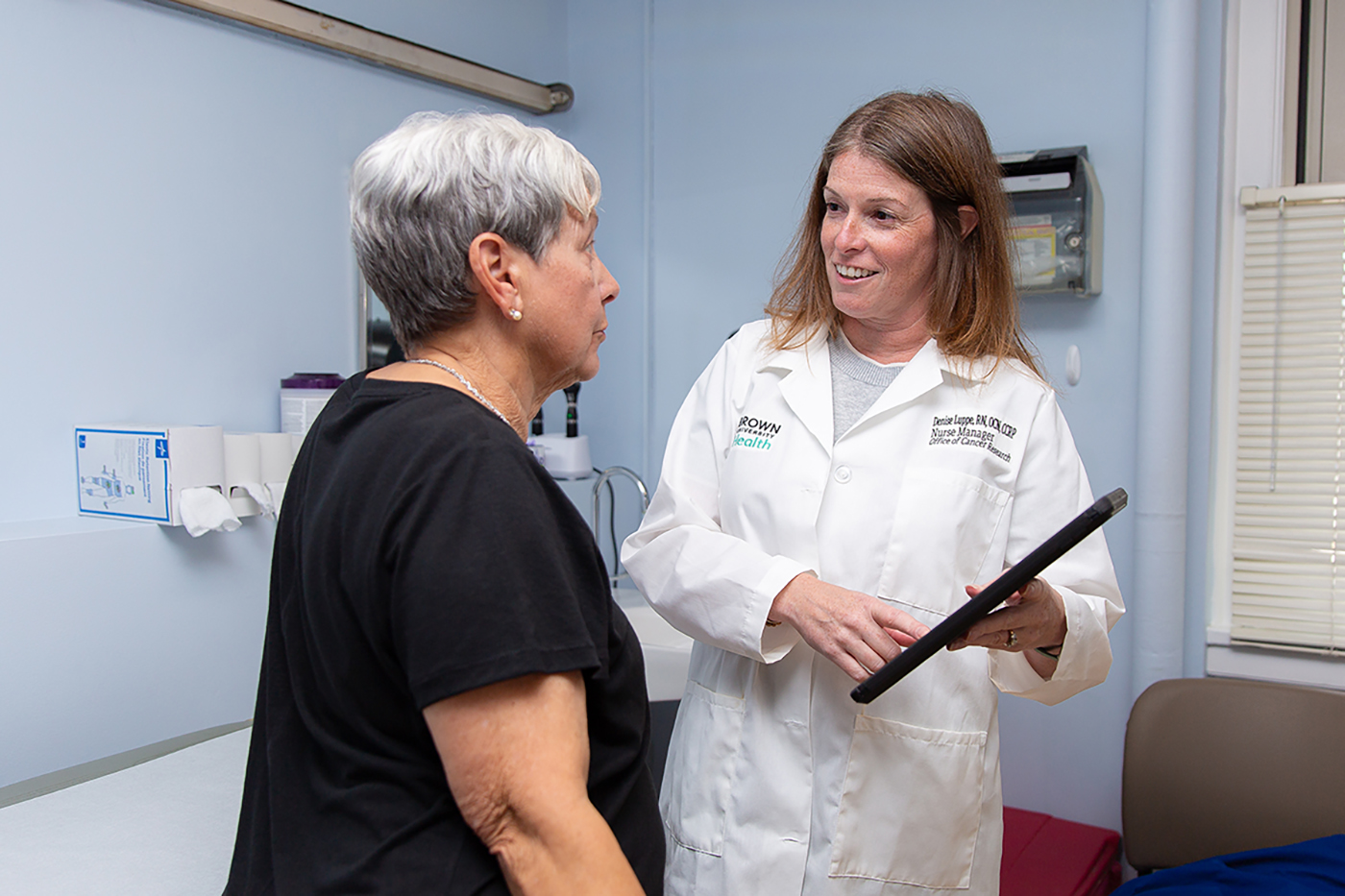
Brown University Health is currently conducting approximately 500 clinical trials in Rhode Island, two-thirds of which focus on aging and aging-associated disorders. Photo courtesy of Andrew Moran/Brown University Health.
Historic investment in the human health span
The Starr Foundation was established in 1955 by Cornelius Vander Starr, a global entrepreneur and humanitarian, and has been stewarded forward across generations by longtime foundation chair Maurice R. (“Hank”) Greenberg, and now by his son Jeffrey. In addition to his role as Starr Foundation chair, Jeffrey Greenberg is a dedicated Class of 1973 Brown University alumnus and a former trustee of the Corporation of Brown University. He is a current member of Brown University Health’s Board of Directors.
“What makes this alliance so compelling is the extraordinary opportunity to bridge laboratory research directly with clinical trials and patient care,” Greenberg said. “By uniting the visionary scientists at Brown University’s Center on the Biology of Aging with the dedicated healthcare and research teams across Brown University Health, the alliance is poised to dramatically speed up the progress from scientific discovery to life-transforming clinical trials.”
The Starr Foundation’s significant contributions to health and medicine aim to improve patient care, treatment and health outcomes, and include grants to support multi-institutional partnerships including the Starr Cancer Consortium, the Tri-Institutional Stem Cell Initiative and the New York Genome Center, as well as collaborations within institutions, such as the Starr Fund for Collaborative Science at the Rockefeller University.
“Brown’s culture of collaboration and innovative research, paired with the extraordinary clinical reach of Brown University Health, positions these partners to transform how society supports healthy aging,” Greenberg said.
Suresh Venkatasubramanian describes himself as a "card-carrying computer scientist." He loves technology, the joy of building, and the elegance of a well-crafted algorithm. But for the past decade, his focus has not been on how to make Artificial Intelligence (AI) faster but on how to make it just.
Dean of Faculty Leah VanWey explains how Brown’s culture of collaboration, the Open Curriculum, and a world-class faculty combine to give students the critical thinking skills and confidence to “balance the speed of technological innovation” while navigating complex global challenges.
Moved by the support of the University’s athletics community during her time on College Hill, the former women’s track and field competitor is stepping up through volunteering so future Bears can have the same opportunities.